There is a fortnight in the middle of July when the Indian buying floor goes quiet, and the quiet is the most misread signal of the year.
The last of the summer wedding-guest orders have shipped. The festive buy for October has not yet been written. Between the two, the desk exhales. The instinct — I have had it myself, more than once — is to read the lull as a lull. Nothing is moving. Wait for the festive brief to land in August and buy then.
The instinct is wrong, and the index is quietly telling you why. Nothing is moving in the place you are looking. Everything is moving one layer down.
What cooled
Look at the occasion tags this week and you would think the year had gone flat. Wedding Guest is declining. Haldi is declining. Mehendi has fallen to the bottom of the occasion board. Festive itself — the tag, the literal word — is trending down. If you buy against occasion labels, mid-July reads as a market with no appetite.
This is exactly the trap. The occasion tag is a lagging indicator. It cools the moment the season it names has passed, because the chatter that feeds it — the search interest, the competitor drops tagged wedding-guest edit, the media captions — is describing what already happened. By the time festive trends as an occasion, the fabric to serve it has been on the loom for eight weeks. You are reading the receipt, not the order.
What is actually moving
Now look one layer down, at the fabrics, and the flat market is not flat at all. It is the loudest it has been since spring.
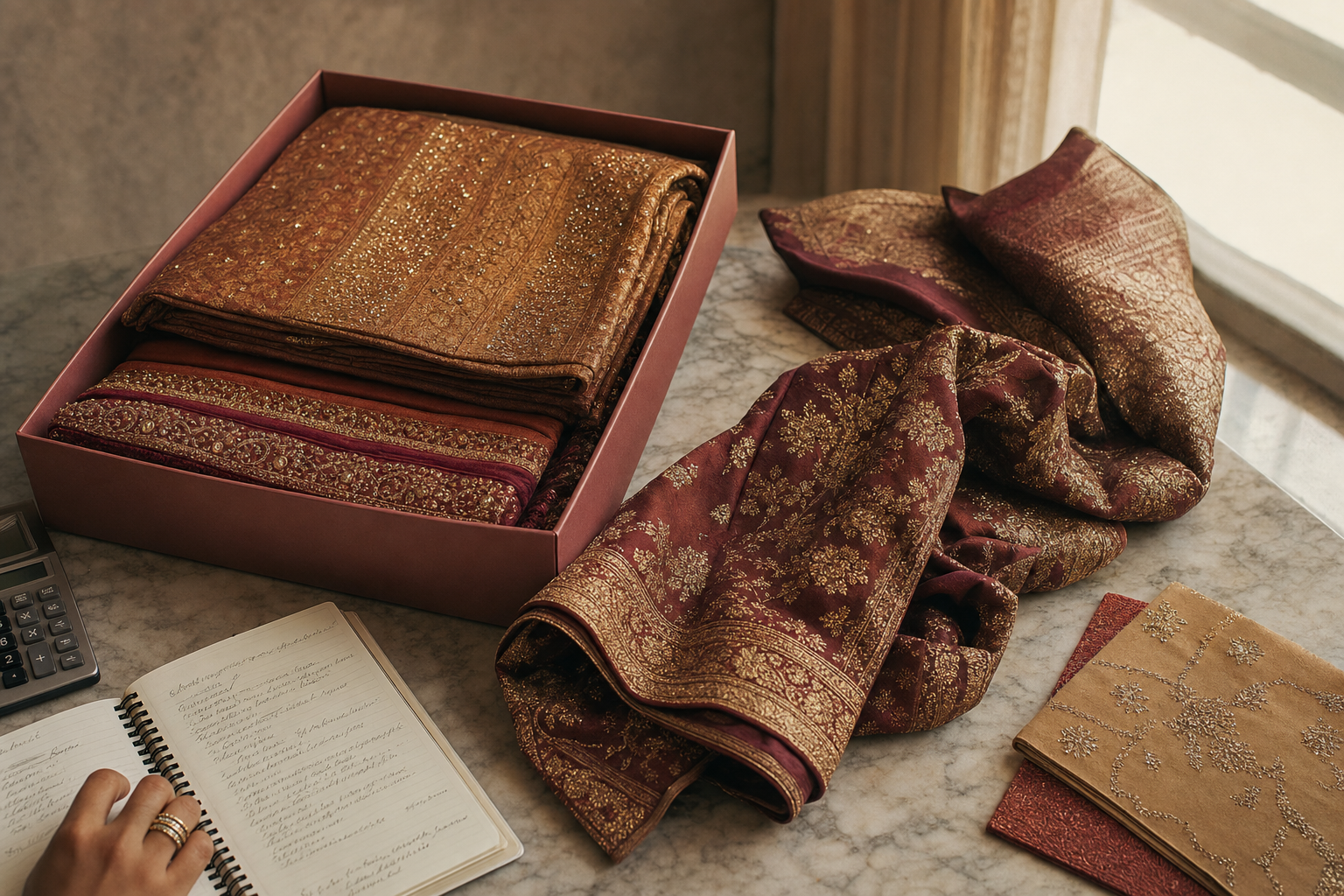
Velvet is up nearly ninety points since May — the single largest move on the board bar none. Gold is close behind. Georgette, crepe, chiffon: all surging, all in the top handful of movers, all of them the exact material vocabulary of an Indian October. The metallics have turned with them — rose gold rising, gold rising — the way they always do in the eleven weeks before the festive window opens.
Nobody is searching festive yet. Everybody is buying velvet.
“By the time festive trends as an occasion, the fabric to serve it has been on the loom for eight weeks. You are reading the receipt, not the order.
”
This is not a coincidence of the calendar. It is the structure of how demand actually forms. Fabric is where a festive season is committed — the mills, the weavers in Surat and Varanasi, the crepe converters, they take their positions now, in the fortnight everyone else calls dead. Occasion is where the season is eventually named, weeks later, once the finished garments are on the floor and the captions catch up. Fabric leads. Occasion lags. A buyer who waits for the occasion to confirm the fabric is, structurally, always a season late to the loom.
The trans-seasonal tell
There is a second thing moving in the quiet, and it is worth a line. Cobalt blue, sky blue, powder blue — the whole blue family is rising, and so is tweed, and so is the cape silhouette. None of these are festive. They are the trans-seasonal restock: the pieces that carry a floor through the low-occasion weeks and pre-position for the autumn-winter drop that lands alongside festive.
So the mid-July board is telling a two-handed story. One hand is reaching forward to October — velvet, gold, georgette. The other is covering the near weeks — blues, tweed, capes — before Raksha Bandhan and Onam in late August give the calendar its next real push. Neither hand is touching the occasion tags. Both hands are full.
What I would do with the fortnight
I would not wait. The fortnight everyone treats as the gap between two buys is the only window in which the festive fabric position can still be taken at a sane lead time and a sane price. The velvet that is up ninety points on the index this week is up ninety points because forty other brands' buyers can also read a loom. The ones placing the order in the quiet are the ones who will have depth in October. The ones waiting for the August festive brief will be paying the panic premium for whatever is left on the shelf.
Concretely: pull the fabric movers, not the occasion tags, into the July review. Velvet, gold-ground georgette, the heavier crepes. Size the opening festive position against them now — not the full buy, the position, the reservation on the loom. Let the occasion-level forecast in August tell you how to split the depth across kurtas and lehengas and co-ords. But take the fabric position while the fabric is the only thing anyone honest is watching.
What I will not pretend
I will not pretend the fabric signal is the whole forecast. It is a leading indicator, not an oracle, and leading indicators are noisy — velvet rising in July is a strong prior for a festive velvet season, not a guarantee, and the depth still has to be sized against the asymmetric cost of being wrong. What the fabric move buys you is not certainty. It is time — the two or three weeks of lead that separate a calm October from a markdown January.
The quiet fortnight is not the market resting. It is the market committing, one layer below the labels, where the looms are. The buyers who hear it are already on the phone to Surat.
The rest are waiting for a word that only arrives once it is too late to act on.